
 Reprinted from Symphony News, Vol. 28, No. 6 (May 1978).
Independent youth orchestras in conflict with public school music departments won an important, far-reaching decision in a case involving the Minnesota Youth Symphony and the Minnesota Music Educators Association.
A judgment handed down on September 22, 1977, held that the MMEA cannot require students to belong to their respective public school organizations but can only strongly recommend that a student who is involved in a non-school youth orchestra also be a member of his or her school music program. The ruling, by Federal Judge Earl Larson, prohibited any intimidation or discrimination by the MMEA or its members toward the members or prospective members and conductors of the Minnesota Youth Symphony.
 The lawsuit was filed in June 1975 by MYS on behalf of itself and its members against the MMEA for reasons of discrimination. The Minnesota Civil Liberties Union argued the case for the MYS because it felt there were violations of students’ rights as stated in the first and fourteenth amendments [of the U.S. Constitution].
As a result of the ruling, the MMEA was ordered to rescind resolutions concerning the relationship between extracurricular and school music programs and to apologize to the MYS, its members and conductors for charges it made concerning unethical and unprofessional behavior. As a precedent, the Minnesota ruling appears to strike down the ASTA Code of Ethics.
Under the final judgment, conditions are set for the relationship of the MMEA and the MYS. Reasonable efforts are to be made to avoid conflicting concert dates. Should a conflict arise, “school music directors cannot discriminate in awarding grades, or deny the students the right to earn credits in a regularly offered school music course if the student should decide to play in a non-school concert which conflicts with a school concert scheduled outside normal school hours.”
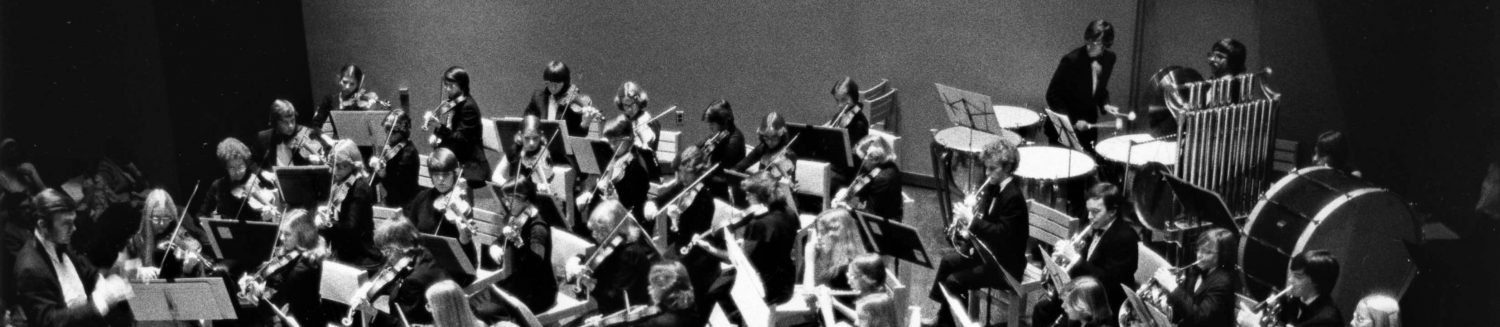
 Minnesota Youth Symphony 1977